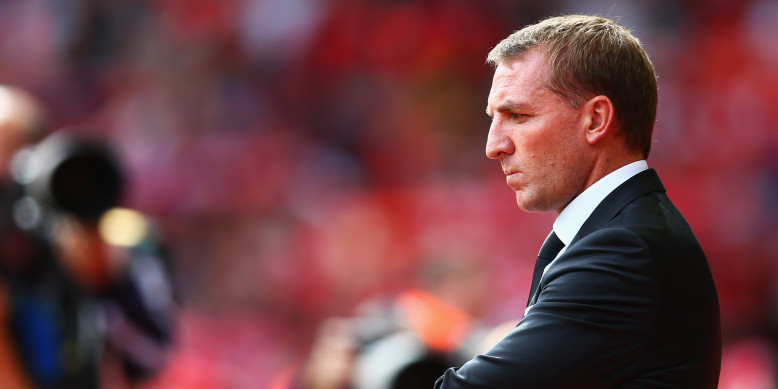

There is an ongoing joke with the Liverpool fan base around Brendan Rodgers’ obsession with the word ‘character’.
Rarely does a post-match interview go by without him referencing the ‘great character of the group’, and rarely does a pre-match press conference not yield at least one mention of a specific player who has ‘shown great character’ to lead to recall or retain their place.
Why then, when the manager clearly states he places such an emphasis on character, does the suspicion persist that as soon as a player shows any real level of character, they are alienated or sold on rather quickly?
To start let’s look at the dictionary definition of ‘character’: The mental and moral qualities distinctive to an individual.
So instantly we can establish that to just say somebody has ‘character’ is a completely meaningless statement and nothing more than an empty sound bite. Everyone has ‘character’: quietness is character, laziness is character, being timid is a character trait.
So, we need to work out what Rodgers means by character when he uses it. In footballing terms it usually refers to mental characteristics that help you ascertain what you can expect from a player. Chiefly amongst these would be: motivation, ability to stand up and be counted, actively looking to take responsibility, leadership and confidence in one’s own ability. These are the traits that make a player stand out; you could have all the ability in the world, but unless you have the mental attributes to give you the platform to express them, they are largely redundant.
It’s no good having a player who is capable of landing a great 70-yard through ball ‘on a sixpence’ if he doesn’t have the confidence to pull it off so plays an easy five-yard pass instead. It is no good for a centre-half to have a brilliant sense of position, unless it is allied with the leadership to tell your partner to fall into place with you, otherwise the defence will be all over the place. A striker who can score overhead kicks galore in training is largely pointless if he doesn’t have the strength of mind to try them, and risk missing, in a game.
Accepting the fact that these attributes are important, and are the traits that the manager is continually referring to, you must then look at the Liverpool squad during the Rodgers regime and start to ascertain which players have, or did have the required character.
A long standing accusation is that Rodgers has sold on players who have a loud voice or influence in the changing room. During his reign, players of that ilk who have been jettisoned include Craig Bellamy, Jamie Carragher, Daniel Agger, Pepe Reina and even Steven Gerrard.
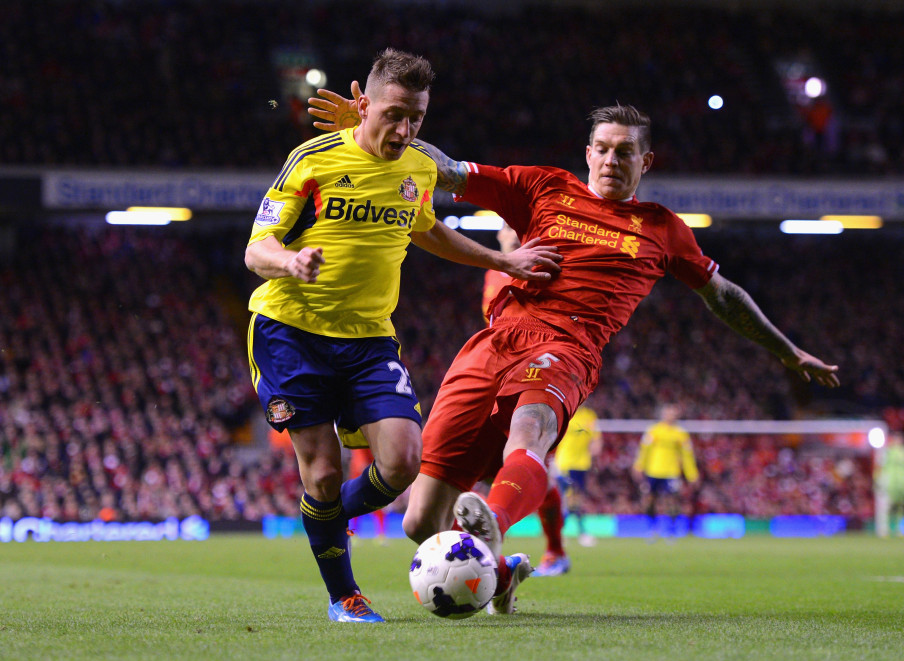
If you take each one as an individual case, then you could make a case to say they were the correct and understandable call:
Bellamy – Wanted to play for hometown club and had dodgy knees. Carragher – Retired of his own volition. Agger – Seemingly admitted at the time that he felt he couldn’t do it at Premier League level anymore. Reina – His form had been patchy in the previous two years, plus there were loud overtures coming from Barcelona, overtures he had done little to discourage. Gerrard – Offered a deal with reduced playing time befitting a man of advancing years, so instead took the opportunity to play regular football and have an adventure for his family.
All sound very reasonable, and the fact that most were essentially replaced with a younger player with less of a presence could be dismissed as being the nature of the transfer market.
However, if you look at a few of the cases, you wonder if more could have been done to retain them, if the manager had chosen to do so.
The party line when Agger left was that he felt his legs weren’t up to the strains of league anymore, coupled with a chance to return to his other footballing love, Brondby. However, within two months he did an interview with TV3 Sport where he confirmed it was a distance between he and Rodgers, combined with regular arguments and Agger’s dislike at being dropped after a strong run of performances that accelerated the split.
In Pepe Reina’s case, whilst his form had dropped in recent times, he was still a class act, had fantastic distribution (which would have dovetailed magnificently with the fast, counter-attacking style we deployed in the season after his departure) and was/is not especially old for a goalkeeper. I’m in no doubt that with the right coaching and encouragement, which is essentially the job of a manager, he could have regained his form. The situation was complicated somewhat by his admittance that a Barcelona offer would have been tough to reject, but you are left with a lingering question: ‘If the will was there, could the club have done more to retain him?’
In the case of Gerrard, again on face value it was the right decision, the club were within the rights to offer a reduced deal, the manager within his rights to tell Gerrard that he would feature less, and the player within his rights to say he didn’t want that, leading to a net results of the parting of the ways and a sad end to an illustrious era. However, subsequently he did admit that had the contract offer come a few months earlier he would have signed it.
So you are left with the above, along with other examples, which in isolation seem rational decisions, but when you take as a whole and dig a little deeper leave the suspicion that more could have been done to keep hold of some of them, had the will been there.
One more example, and the reason that this subject came to mind is Jonjo Shelvey. In the interests of full disclosure I was always a big fan of his at Anfield and felt he had massive potential. As a young lad he carried himself with a lot of attributes that you would usually associate with someone who is said to possess ‘character’. He had massive faith in his own ability, never scared to shout at team mates to encourage and reprimand, showed a willingness to fail by trying difficult options and backed down from nobody, not even Sir Alex Ferguson, who himself came away from their touchline spat saying: “You’ve got a bit of balls about you.”
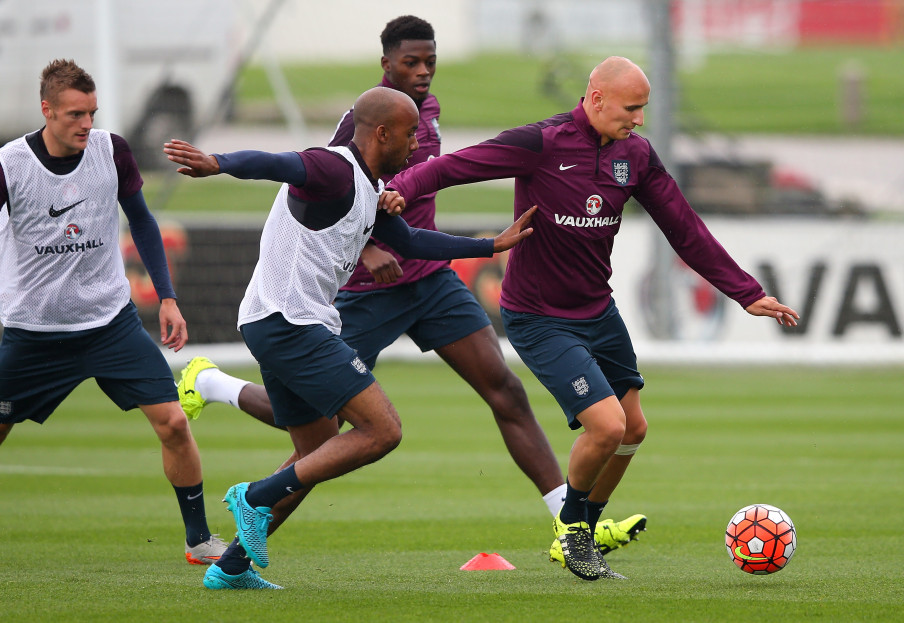
Around the time he left, it was clear his attitude was not great. A few good Europa League performances had seemingly gone to his head, and his form had dropped off.
However, in Rodgers we are led to believe that we have a manager with two great strengths;
Developing young players, and encouraging players with character.
Surely Shelvey should have been a welcome challenge for him; someone to harness, encourage and develop into a mature player whilst maintaining the spark that makes him stand out. Instead he sold him, gave up on him and seemingly decided that his ‘sparkiness’ was a negative and outweighed his obvious ability. In doing so he retained the clearly inferior, but much quieter and assimilated Joe Allen. There are not the actions of a manager who embraces character.
In Rodgers’ first season, around the time Benteke destroyed us (and in particular Skrtel) at Anfield, Carragher was recalled with Rodgers claiming that “we have a very quiet squad”, seemingly indicating that we lack leaders and motivators, or to put it another way – ‘characters’. Three years on, and the squad looks the same. Skrtel and Lovren are not particularly communicative. Mignolet tried once he was recalled in the second half of last season but it doesn’t seem to come naturally. Henderson, Milner and Lallana in the middle are vocal, but seem to lack the gravitas and aura to make themselves heard.
If you were to look at the current squad you would say there are few who possess real character. Can and Sakho would be two of those type, but by and large they are really not in the manager’s first team plans.
So the question is, when Rodgers refers to ‘character’ what does he actually mean? The suspicion, as I highlighted at the outset is that he clearly doesn’t know what it actually means. To Rodgers, seemingly a character is somebody who will work all day (nothing wrong with that), has a good attitude, won’t cause a fuss, will do as they are told and in no way kick up a fuss or rattle the boat. That may make for a harmonious XI who are all pulling in the same direction and are firmly in the manager’s good books, but rarely does it lead to success.
If he has any chance of success at Anfield, I suspect Brendan Rodgers needs to move out of his comfort zone and allow certain a players a bit more autonomy, much as he did (or was forced to do) with Suarez. Let the leaders lead, let the players stand up and express themselves and harbour an environment where timid ‘yes’ men are not completely enveloping the team, otherwise we will continue to coat along dropping slowly further behind, and Rodgers will be guilty of being a manager who cannot handle big personalities.
Or, to put it another way, maybe Brendan Rodgers needs to show some character.


Comments.
Loading comments…