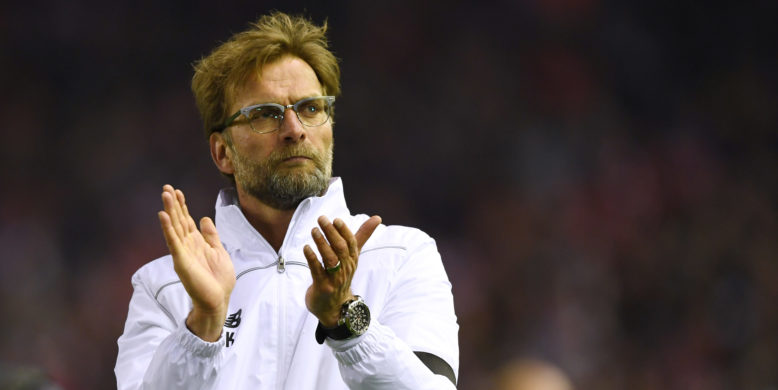

In this extract from his new book Klopp: Bring The Noise, Raphael Honigstein explains how people at Dortmund reacted to their infamous 4-3 loss at Anfield in the Europa League back in April, 2016.
The last-16 draw in the Europa League pitted Liverpool against their hated rivals Manchester United. Europe’s second competition, previously an unloved consolation prize for teams who had failed to break into the top four, offered a backdoor entrance into the Champions League for the winner, and, almost as importantly, a chance to ruin United’s season. Anfield, crackling with the excitement befitting a big European tie, played its assigned role in pushing the home side to a devastating 2-0 win in the first leg. A cool, controlled 1-1 draw in the return at Old Trafford sealed qualification for the quarter-finals. Klopp knew the next opponents quite well: Borussia Dortmund.
‘These two games were certainly challenging for the both of us, and also for our friendship,’ says Borussia CEO Hans- Joachim Watzke, relieved that the saxophonist in the Marbella hotel lobby has finally concluded his medley of Kenny G’s greatest hits. ‘We had to do some things we usually wouldn’t have done.’ Watzke had implored the players to get into ‘competitive mode, out of the hugging mode’ ahead of the emotional reunion with their former manager. ‘He wants to kill our team and the fans with kindness,’ the BVB boss had warned. ‘But we aren’t playing against our friend Kloppo. We mustn’t lose our aggression.’
Watzke emphasises that he hadn’t said anything disrespectful. ‘All I said was: these games cannot turn into the Jürgen Klopp festival. I had heard that he was a little miffed about that and from the way his family greeted me ahead of the return leg in Liverpool, I could tell he had indeed taken it badly. It also annoyed him that it worked.’ It had only worked up to point, however, as Watzke is quick to admit. The crowd at the Signal Iduna Park were ready for battle but the players found it hard to come to terms with Klopp sitting on the opposition bench. ‘In a normal game, we would beat them,’ says Watzke. ‘But this wasn’t a normal game. At the beginning, the team were completely inhibited, you could feel that we lacked bite in the first half. It probably would have been worse if I hadn’t talked so much to the players and the people around the club beforehand.’

Klopp could not hide that the return to Westphalia had touched him, too. ‘I lied if I told you all that stuff going on didn’t somehow knock me sideways,’ he said after the 1-1 draw. The ice-cool facade he had put on the day before, he now confessed, had been just that. ‘I prefer being here than in North Korea,’ he had joked on the eve of the game. ‘But I don’t think there will be a big emotional effect on me. We will change, get out there and play. That’s it.’
For Dortmund, it certainly wasn’t. Unable to play to the incredibly high standards of their season thus far, the Thomas Tuchel-coached side only truly got going well into the second half. Due to the away goals rule, the advantage lay with Liverpool. ‘Anfield will burn,’ Klopp threatened. His competitive streak trumped all emotional connections to former comrades-in-arms, temporarily at least. ‘I bumped into him outside the changing rooms – they’re very close together at Anfield – and wished him “a good game”,’ says BVB team manager Fritz Lünschermann. ‘He went: “Listen, you arse. I don’t want to see a good game. I want to win.” ’
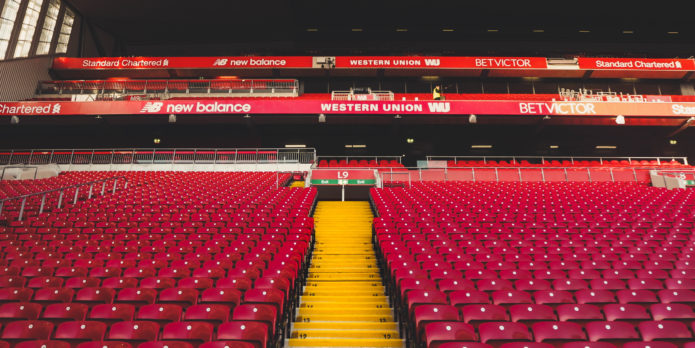
At first, it was Dortmund that laid fire to Liverpool’s home. The Bundesliga side’s mazy, cutting runs in the final third completely overwhelmed the flat-footed defence of the Merseysiders to give the Black and Yellows a 2-0 lead within nine minutes. The Premier League team needed three goals to advance against vastly superior opposition. The game was over.
Klopp thought otherwise. In the dressing room at half- time, he showed his team clips of three Liverpool attacking moves that had nearly paid off, assuring them that more chances were bound to come. He also reminded the players of their club’s capacity to triumph in the most unlikely circumstances, mentioning the comeback of all comebacks, Liverpool’s Champions League win over AC Milan in Istanbul 2005, after going 3-0 down in the first forty-five minutes. ‘He told us we should create something that we could tell our grandchildren about one day,’ said Origi.

The Belgian striker’s goal shortly after the restart did bring some hope but Dortmund struck back to win the tie a second time when Marco Reus completed another fine combination on fifty-seven minutes. Liverpool’s heads dropped. Anfield was ready to accept the inevitable.
One man, dressed in all white, was not. Klopp said he could ‘smell, hear and sense the sensation’. He egged on the crowd to scream until the hopelessness was drowned out by defiance. ‘It felt as if he had brought himself on, as a twelfth factor, as an instigator and motivator for the players and the fans,’ wrote Die Welt.
‘He cooked up a storm on the touchline, he’s good like that,’ says Watzke. ‘Using the power of the crowd against us was legitimate, it was his job in retrospect, just as it had been my job in the first leg. But it was nevertheless strange for us. I have rarely seen something like that, at that level of severity.’ Norbert Dickel, too, felt somehow hurt that Klopp turned the stadium against them. ‘I didn’t like the fact he whipped up the fans like that,’ says the former BVB striker. ‘It was professional, from his point of view; it was the right thing in his eyes, but not in ours. He could have done without doing that. I know he’ll never admit that. But I’m not upset with him any more.’
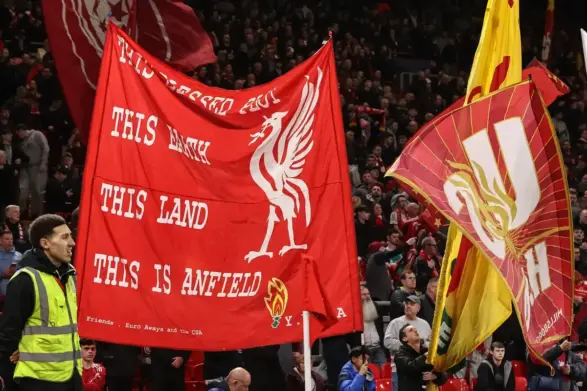
Philippe Coutinho scored to make it 2-3 on sixty-six minutes. Liverpool had clawed their way back to a two-goal deficit. The Germans continued to play really impressively, technically far ahead of their hosts. But this was one of those nights when the noise at Anfield becomes a weapon and opposition hearts wilt in the floodlight. A mythical force grabbed hold of the contest and pulled it into the realm of fantasy, or nightmares, depending on your viewpoint. ‘We started shitting ourselves,’ Mats Hummels said later. Dortmund were so shaken that ‘different parts of the tems were playing different systems.’
As soon as Mamadou Sakho headed in the Reds’ third goal twelve minutes from time, Watzke knew it was all over. ‘I resigned myself to losing at that point,’ he says. ‘We knew how much power Jürgen could generate on the touchline. It’s no coincidence we scored many goals in the eighty-ninth minute. Against Malaga, he had been the only guy in the stadium believing we could still do it and we did it. At 3-3, it was only a question of time before we would concede again. And then the whole stadium …’ He doesn’t finish the sentence, overcome by horror and admiration. ‘Karl-Heinz Riedle and Nuri Sahin had both played at Anfield. But they told me, they had never seen anything like that. That’s Jürgen’s doing.’
Dejan Lovren made the madness a reality, two minutes into injury-time. Klopp could not believe the ball had actually crossed the line at first. Anfield was shouting his name at the final whistle, over and over again. ‘The German manager departed the arena like a gladiator exiting the Coliseum following the slaying of a formidable beast,’ wrote the Independent. His vanquished opponent, Tuchel, found it impossible to come to terms with the result. ‘I can’t explain it because there are no logical explanations. Emotions won the day,’ he said, staring into the middle distance in utter desolation. Unlike the experienced miracle-worker Klopp, he hadn’t been able to anticipate the approaching insanity. Such an irrational turn of events was beyond the realms of his imagination. He had no means to intervene effectively.

‘It was one of the worst defeats during my twelve years at Dortmund,’ says Watzke. ‘Not because of Jürgen – I was even pleased for him at the end. No. We were so close to winning an international trophy. I think we would have won it. We got knocked out in Liverpool. But actually, we had already lost the tie in Dortmund, I feel.’ It took a month before his relationship with the former Borussia coach recovered, he adds. ‘I don’t think I’ll ever experience something similar. But our friendship is strong enough to endure.’
‘I know it might sound funny but if I’m being completely honest, I thought he deserved it,’ says former BVB midfielder Ilkay Gündogan, now at Manchester City. ‘Even though we got knocked out and were really hurt, I was pleased for him.’ Lünschermann had noticed the same signs of involuntary fraternisation. ‘His former players still feel a strong emotional bond with him. You could see it when Sven Bender went to high-five him while warming up. I don’t think everybody liked it. But it’s understandable.’
Liverpool’s owners FSG had seen enough. That April, they approached him and his staff with an offer to extend their contracts to 2022. ‘When you have an individual of Jürgen’s quality in the building it makes perfect sense to secure that person for the long-term,’ principal owner John Henry, chairman Tom Werner and FSG president Mike Gordon declared after the new deal was signed in July. ‘To not do so would be irresponsible.’ In exchange for the board’s commitment to him, Klopp pledged eternal loyalty. ‘I will never go to another Premier League club,’ he assured the Americans.
Raphael Honigstein’s Klopp: Bring the Noise is out on 16th November 2017. Order your copy here.
Comments.
Loading comments…