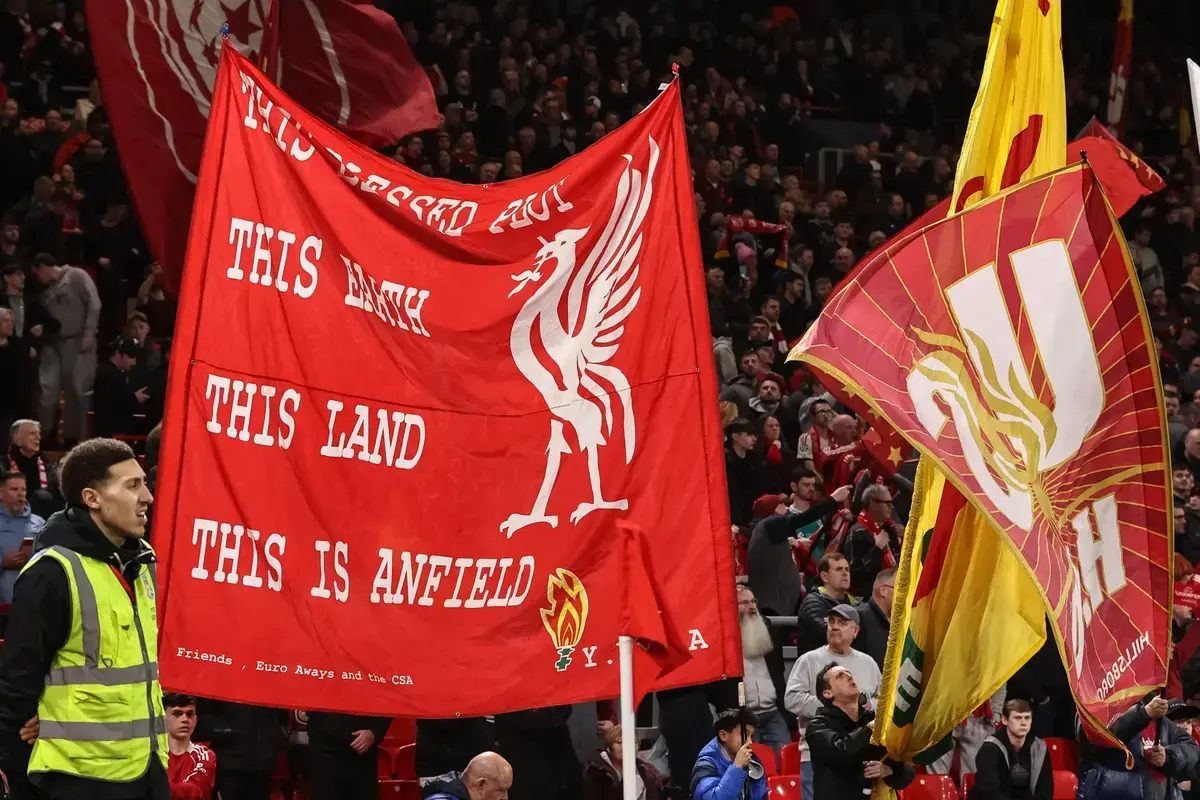

There is a particular quality to a Tuesday at Anfield that no league fixture quite matches.
The anthem, the floodlights, an opponent nobody in the ground has watched more than twice. For supporters who also have a passing interest in the betting markets, European nights used to be the easy part of the calendar. Six group games, a couple of them formalities, a qualification price that barely moved after matchday two.
That competition no longer exists. UEFA scrapped the eight-group structure before the 2024-25 season and replaced it with a single league table of thirty-six clubs, each playing eight different opponents, four at home and four away. Three points for a win, one for a draw, and a finishing position that decides everything. The top eight go directly into the last sixteen. Ninth to twenty-fourth drop into a two-legged play-off in February. Twenty-fifth and below are out of Europe altogether, with no consolation route into the Europa League.
The format changed the football. It also changed which bets are worth making, and quite a few supporters are still betting on the old competition without realising it.
The bookmakers got the first one badly wrong
The clearest evidence that the new structure broke the models arrived in Liverpool’s first attempt at it.
Before a ball was kicked in 2024-25, Opta’s projections had the Reds down for thirteen points from their eight matches, with a 31.7 per cent chance of finishing in the top eight and taking the automatic route to the last sixteen. Reasonable enough on paper. Arne Slot was in his first season, the fixture list looked awkward, and nobody knew what thirteen points would actually be worth in a table nobody had ever seen.
Liverpool won their first seven games, lost the last one to PSV, and finished top of the whole thing on twenty-one points.
That gap between the projection and the reality is the interesting part for anyone who bets. It was not a case of one model having a bad week. Every pricing operation in the industry was working from historical group-stage data that no longer described the competition being played. Eight different opponents, a single table, a points threshold nobody had established. The first season of any new format is the season where the numbers behind the odds are at their least reliable.
By 2025-26 the market had caught up considerably. Arsenal won the league phase with a perfect twenty-four points, Liverpool finished third on eighteen from six wins and two defeats, and the spread of results looked far closer to what the projections expected. The easy money in format novelty lasted roughly one campaign, which is usually how these things go.
Position markets are the real European bet now
Under the old system, betting on qualification was mostly pointless. A club like Liverpool would be a prohibitive price to escape a group of four, and the market offered nothing.
A thirty-six team table is a different proposition entirely. There is now a genuine question with a genuine price attached: does the club finish in the top eight and skip February, or does it land somewhere between ninth and twenty-fourth and have to play two extra matches against a seeded opponent?
That distinction matters enormously to the club and it is priced as a market. The top eight get a bye and, crucially, they are seeded for the last sixteen draw and play the second leg at home. Ninth to twenty-fourth face a play-off round in the middle of a Premier League title race, then a last sixteen tie against a seeded side. The difference between eighth and ninth place is two extra fixtures in February and a considerably harder path.
Supporters who watch every minute of the league phase have a real advantage here over a model working from coefficients. They know which squads are being rotated heavily in Europe and which are treating it as the priority. They know whose eight-match draw looked kind on paper and turned out not to be. And because the table only takes shape across September to January, these are short-term markets rather than season-long ones, which means a view can be formed and settled inside four months.
The trap is the same one that catches people in every table market. A club on twelve points after five games looks safe until the remaining fixtures are examined. Position markets are decided by the schedule as much as by the football.
Two legs is one match spread across a fortnight
The knockout rounds create a market structure that exists nowhere in domestic football, and it is regularly misread.
A two-legged tie is not two separate matches. It is one contest with an interval of a week or more in the middle, and the second leg is played under conditions created by the first. Pricing the second leg as though it were a standalone fixture is the most common error in European betting.
Liverpool’s 2024-25 exit demonstrates it perfectly. The Reds won the first leg 1-0 at the Parc des Princes through Harvey Elliott. Anyone looking purely at the aggregate position would have made Liverpool strong favourites to progress. But a 1-0 away lead is one of the most fragile positions in football, because a single goal for the opponent flips the tie entirely and the leading side spends ninety minutes deciding whether to attack or protect. Ousmane Dembélé scored at Anfield, the tie went to penalties, and PSG won the shootout 4-1 on their way to lifting the trophy for the first time.
The lesson is not that Liverpool were unlucky. It is that the second leg of a tie at 1-0 was always a genuine coin-flip regardless of how comfortable the aggregate looked, and the market often does not respect that enough.
Different lead structures produce entirely different second legs. A 2-0 home advantage tends to produce a cautious away performance and fewer goals. A high-scoring draw leaves both sides needing to attack. A narrow away lead, as Liverpool learned, invites exactly the sort of nervous evening that ends with a shootout.
What the market actually settles on
This is where money gets lost through paperwork rather than football, and it is worth ten minutes of anybody’s time.
Match result markets on a knockout leg settle on ninety minutes. Extra time and penalties do not count, which is why a bet on Liverpool to win the second leg against PSG would have lost on the night despite the tie going the distance. Bets on qualification settle on who advances by any route, shootout included. Those are two completely different bets on the same evening, and the prices reflect that.
Aggregate markets, whether either side wins the tie by two or more goals across the two legs, add another layer. So does the shootout market itself, which some sportsbooks offer once a tie enters the closing stages of the second leg.
None of this is complicated. It just needs reading before the bet is placed rather than afterwards, because European nights produce more disputes over settlement than any other competition in football.
Betting on a Tuesday from six time zones away
Liverpool have one of the most widely distributed supporter bases in world football, which means a substantial number of people following these matches are doing so at inconvenient hours. An eight o’clock kick-off in Merseyside is the small hours in much of Asia and the middle of a working day elsewhere.
That reality is part of why crypto deposits have found a natural audience among overseas supporters. Card payments across borders can be declined, delayed or subject to fees that make a modest stake pointless, and a bank verification request at three in the morning local time is not a workable process. A wallet transfer settles in minutes regardless of geography or banking hours.
Anyone getting set up for a European campaign will find the Stake betting promo offer straightforward: the code NEWBONUS unlocks a sports welcome bonus of up to $3,000, and the account can be funded with Bitcoin, USDT or ordinary money depending on what suits. The bonus turns over across a run of bets, which fits comfortably alongside eight league-phase matches and whatever the knockouts bring. A rundown of which operators take digital currency, and what conditions each one attaches, can be found over at CryptoBets.com.
The sensible discipline for late kick-offs is a familiar one. Decide the European budget before the week starts, fund the account in daylight, and avoid making financial decisions at the point where a tie is slipping away at two in the morning.
Thinner markets, sharper edges
One last structural point about European football that domestic bettors underestimate.
Champions League markets outside the biggest fixtures are thinner than Premier League ones. There is less money going through them, less public information about some opponents, and less analytical attention on a Tuesday night involving a club from a smaller league. That cuts both ways. Prices can be softer, which is where an edge might exist for someone who genuinely follows continental football. Prices can also be wider, with more margin built in, which is where casual bettors quietly lose more than they realise.
Rotation compounds it. European nights sit three days either side of league fixtures, and squads are managed accordingly. A team sheet on a Tuesday can look very different from the one that started on Saturday, and player markets in particular are treacherous until the line-ups land.
Eight matches, a single table, a February play-off nobody wants and a knockout format where the second leg is shaped by the first. It is a better competition to bet on than the old group stage ever was, mostly because there is genuinely more to work out. It rewards supporters who watch it properly and punishes anybody still betting on it as though it were 2023.
The atmosphere on the Kop for a European night remains the reason to be there. The bet, if there is one, should be small enough to be forgotten by the time the anthem finishes.






Comments.
Loading comments…