

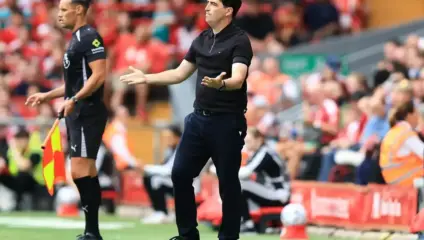
Another day for ReadLiverpoolFC.com to review the talking points of the day. Today Liverpool’s summer is being pulled in two directions at once: the club need clarity in the transfer market after another expensive winger route became more complicated, while the World Cup has just handed Andoni Iraola a very different pre-season picture from the neat one every new head coach would like.
The headline issue remains the attack. Mohamed Salah’s departure has left Liverpool trying to rebuild one of the defining areas of the team, and every major wide-forward link is now being judged against that gap. Bradley Barcola is the latest name to dominate the conversation, but the real talking point is not simply whether Liverpool like him. It is whether this summer’s market is already drifting into a price range where even a club with ambition has to be ruthless.
Barcola interest shows the scale of the Salah problem
There is a reason the Barcola discussion has bitten so quickly. Liverpool do not just need another body in the forward line. They need pace, one-v-one threat, output, and someone capable of changing the mood of a game from wide areas. That is an expensive checklist at the best of times, and it becomes even more expensive when half of Europe knows Liverpool are reshaping after Salah.
Reports around Paris Saint-Germain’s stance have made this feel like a much harder chase. The line attributed to David Ornstein is that PSG view Barcola as not for sale, with the French club not under pressure to cash in after other business and with the player still holding strong market value. This Is Anfield also relayed the eye-catching suggestion that PSG could value him above the huge fee Manchester City are set to pay for Elliot Anderson, which tells you where the market temperature is.
That does not mean Liverpool should walk away from elite targets. It does mean Richard Hughes and Michael Edwards have to decide how much of the summer can be tied up in one winger saga. If Yan Diomande is leaning towards PSG and Barcola is being priced like a crown-jewel asset, Liverpool need either a breakthrough, a convincing alternative, or a very firm internal deadline.
The supporters’ frustration is understandable. After Salah, the right side is not just another position on a team sheet. It has been the team’s attacking reference point for years. Replacing that with a committee of maybes would feel underpowered; overpaying wildly for the wrong player would be just as dangerous. The balance is awkward, but this is exactly why the recruitment structure was brought back into sharp focus.
Munoz gives Iraola a start, but not the whole answer
Victor Munoz is the part of the rebuild Liverpool have actually completed, and that matters. The Guardian reported earlier this month that Liverpool triggered the £34.5m release clause in his Osasuna contract, making him the first signing of the Iraola era. At 22, quick, versatile and able to play across the front line, he fits the direction Liverpool appear to be chasing.
But Munoz should not be treated as the full solution to the Salah-sized question. He is a smart start because he gives Iraola running power, flexibility and a player he clearly values. He is not, on his own, a guarantee that Liverpool’s wide threat will survive such a major attacking reset.
That is the tension supporters are living with. Munoz looks like a coach-driven signing, and there is nothing wrong with that. In fact, it may be a healthy sign that Liverpool are not handing Iraola a squad built entirely for the previous regime. But the next move has to carry more certainty. If the club cannot land Barcola or Diomande, the alternative cannot feel like a shrug. The new head coach needs weapons, not just projects.
World Cup pain changes the pre-season picture
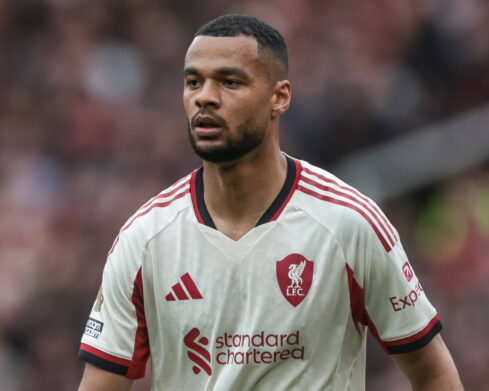
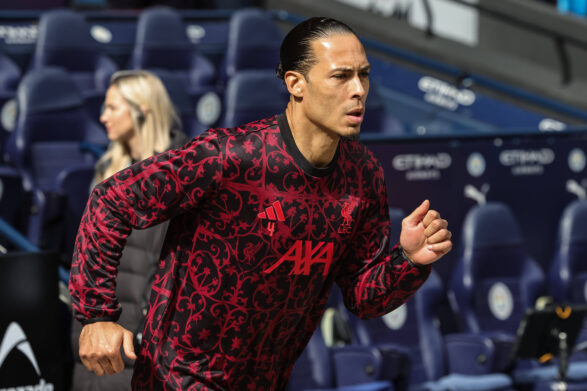
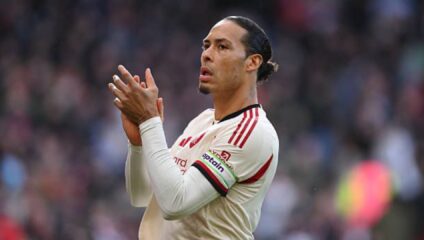
Liverpool’s official site confirmed Cody Gakpo scored for the Netherlands against Morocco in their World Cup last-32 tie, with Virgil van Dijk and Ryan Gravenberch also starting. The Dutch went out on penalties after Morocco equalised late, and Gakpo’s goal came amid emotional scenes following the tragic loss of his unborn son.
There is a football angle here, but it needs some perspective. Gakpo’s summer is not just about form, minutes or tactical usage. Liverpool will want him back physically ready, of course, but the human part matters too. He has carried a deeply personal grief in the middle of a global tournament, then experienced the crash of a penalty-shootout exit. The club will need to manage him with care, not just with sports-science scheduling.
For Van Dijk and Gravenberch, the exit at least creates a clearer rest window. For Iraola, though, the wider World Cup picture is messy. Alisson and Brazil have advanced, while Florian Wirtz and Germany are out after another penalty-shootout shock. The squad will come back in stages, and that matters when Liverpool’s first competitive game under Iraola is away at Newcastle United on Sunday August 23.
Newcastle away is not a gentle opening. It asks for structure, sharpness and authority immediately. The issue is whether Iraola can install enough of his pressing and transition ideas when several key players are recovering from tournament football, some are joining late, and the attack may still be changing.
Bajcetic question is a reminder that development cannot wait forever
Stefan Bajcetic is the quieter talking point, but it is an important one. The Liverpool Offside relayed reporting from David Lynch that Liverpool could be open to a permanent sale this summer, while also noting that a loan may be more realistic given his disrupted recent years.
That one hurts a little because Bajcetic once looked like one of the cleanest answers to Liverpool’s midfield future. His 2022-23 breakthrough had real substance: composure, anticipation, and a maturity that made him feel older than he was. Since then, injuries and uneven loan spells have changed the conversation from pathway to rescue plan.
The lesson is not that Liverpool should give up on young players quickly. It is that development has to be active. If Bajcetic is not going to get meaningful minutes under Iraola, sentiment cannot be the strategy. A permanent move with the right protections, or a loan that genuinely points somewhere, would make more sense than another season spent hovering around the margins.
The bigger question: can Liverpool move quickly enough?
All of today’s talking points come back to time. The market is moving. PSG’s stance on Barcola complicates one of the more exciting attacking routes. Munoz is through the door but still needs the right pieces around him. World Cup exits and progress are changing who Iraola gets, when he gets them, and in what condition. Bajcetic’s future underlines how many squad decisions still need real answers.
The optimistic view is that Liverpool have already shown they can act decisively by moving for Munoz. The cautious view is that the hardest work is still ahead. The club are not just adding depth; they are trying to give a new head coach a post-Salah attack, a coherent pre-season and a squad with fewer unresolved cases.
That is why the next few weeks matter so much. Liverpool do not need every deal done tomorrow, but they do need direction. If Barcola is too expensive, move with conviction. If Bajcetic needs a reset, make it purposeful. If Iraola’s ideas are to take hold before Newcastle, the squad cannot still be waiting for its shape in mid-August.
Today’s mood, then, is not panic. It is pressure. Liverpool’s summer has a plan on paper. Now it needs pace.


Comments.
Loading comments…